


技術船舶管理とは何か?
技術船舶管理は 、船舶のライフサイクル全体にわたるケアを含み、運航のあらゆる段階で安全で、コンプライアンスが整い、エネルギー効率が高く、コスト効率が良いことを保証します。海洋工学の専門知識、予防保全、データ駆動型の監督を組み合わせ、船舶の航行性と所有者の安心感を保ちます。
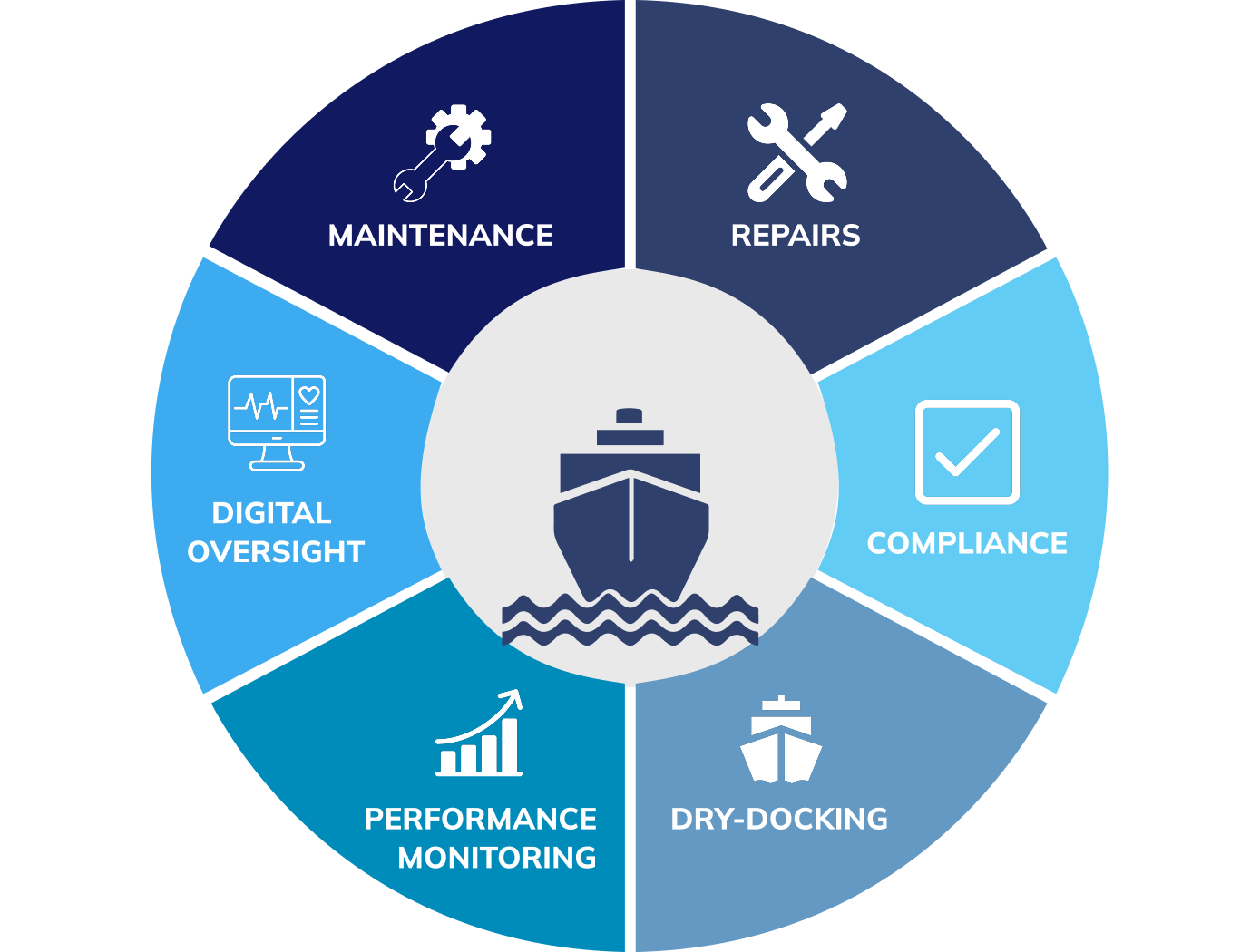
本質的には、船のあらゆる技術的要素を管理し、オーナーが商業的な性能に集中できるようにすることです。これには、メンテナンス、修理、クラスおよびフラッグの遵守、 ドライドック、性能監視、環境最適化が含まれます。
Synergy Marine Groupでは、技術管理はメンテナンスにとどまりません。それは、予測管理と安全性、正確さ、責任を重視する哲学を通じて、船主が運航の信頼性、ライフサイクル価値、持続可能性を達成するのを支援することです。
船舶管理共同CEOのアジャイ・チャウドリー氏が説明します:
「今日の技術管理は単に機械の維持管理だけではありません。信頼を維持することが大切です。私たちの焦点は予測的信頼性にあり、メンテナンスのスケジューリングからデジタル統合に至るまで、すべての意思決定が運用の継続性とオーナーの信頼に寄与します。」
技術船舶管理の主な責任
予防保守やエンジニアリング支援からコンプライアンスや性能最適化に至るまで、技術管理は船舶の安全と長期的な効率性を確保する相互に関連した幅広い責任範囲をカバーします。

船舶整備管理
予防整備は技術的な船舶管理の中心にあります。Synergy Marine Groupは、カスタマイズされた計画整備システム(PMS)を用いて、船体検査から機械のオーバーホール、腐食制御に至るまで、世界中の艦隊全体ですべてのメンテナンス活動をスケジュール・監視しています。
この規律あるデータに基づくアプローチは、予期せぬダウンタイムを最小限に抑え、船舶の寿命を延ばします。

船舶管理共同CEOのヴィカス・トリヴェディ氏は次のように述べています。
「予防保全とは、工学の分野と先見の明が交差する分野です。データ分析とチームの経験を組み合わせることで、問題が運用に影響を及ぼす前に予測し、船の安全で清潔かつ長く運航できるようにします。」
海洋技術管理
海洋技術管理は、継続的なエンジニアリング監督、トラブルシューティング、陸上支援を含みます。シナジーはリモートオペレーション最適化センター(ROOC)を通じて、燃料消費、性能傾向、機器の健康状態をカバーする24時間体制の船舶監視を提供しています。
人間の専門知識と分析を融合させることで、Synergyは異常の早期発見と国際規制への整合性を確保し、エンジニアリングインテリジェンスを運用のレジリエンスへと変えます。

船舶保守管理
ドライドッキング、クラス調査、緊急修理には正確さとタイミングが必要です。Synergyの技術チームは世界中の造船所プロジェクトを調整し、安全基準と予算の一貫した遵守を確保しています。
船舶運用管理
運用最適化は技術的な信頼性と密接に結びついています。シナジーは航海計画、エネルギー管理、排出追跡を統合し、IMO規則に沿って燃料廃棄物を削減し効率を向上させています。
海洋艦隊管理
艦隊管理は 多様な船舶種や職種間で一貫した性能を保証します。Synergyは高度な分析を活用して効率のベンチマーク、コスト指標の追跡、そして統一された安全・コンプライアンス基準の維持を行っています。
その結果、グローバルな艦隊が規律、責任、持続可能性をもって運営されています。
船舶修理管理
船舶修理管理には、修理スケジュールの調整、造船所との調整、緊急修理状況の管理が含まれます。一般的な船舶修理の種類には、船体、機械、電気、推進システムの修理が含まれます。
シナジーは世界中の信頼できるサプライヤーや造船所とのパートナーシップにより、迅速かつ高品質な修理を可能にし、船舶ができるだけ早く運航に復帰できるようにします。

技術サービスおよび海洋工学
状態評価から本格的な改修まで、シナジーの技術サービスはエンジニアリングの深さと運用先見性を兼ね備えています。海洋工学チームは推進点検、エンジン診断、船内トラブルシューティングを行い、船舶が最高クラスおよび旗の基準を満たしていることを確実にしています。

アジャイ・チャウドリー、共同CEO – シップマネジメント
「すべての検査と監査は学ぶ機会です。私たちの目標は単に基準を満たすだけでなく、海上や陸上からの教訓をより安全で効率的な運用に変換し、それを継続的に向上させることです。」
技術船舶管理サービス
Synergy Marine Groupは、船舶の効率性、安全性、コンプライアンスを確保するために、包括的な技術船舶管理サービスを提供しています。これらのサービスは各船舶の運用ニーズやライフサイクル段階に合わせてカスタマイズされています。
規制遵守と認証
SOLAS、MARPOL、ISM規範などの国際海事条約の遵守には厳格さが求められます。Synergyのコンプライアンスフレームワークは、管理下のすべての船舶に対して監査、文書管理、検査への継続的な準備を組み込みます。
コンプライアンスの柱

乗組員技術支援と訓練
技術管理は、乗組員の能力が船舶の複雑さに見合う場合にのみ成功します。シナジーのデリー、チェンナイ、ムンバイ、マニラ、ジャカルタのトレーニングセンターは、デュアル燃料および次世代システム向けの没入型シミュレーションモジュールを提供し、将来に備えた海事人材を育成しています。

コスト管理と調達
中央集権調達とベンダーパートナーシップにより、Synergyは妥協なくコスト効率を実現します。すべての技術的な意思決定は、品質、信頼性、ライフサイクルの経済性のバランスを取っています。
パフォーマンスモニタリングと透明性
ROOC施設を通じて、Synergyは船舶の状態、燃料性能、安全データをリアルタイムでカバーするダッシュボードを提供します。透明な報告はオーナーの信頼を高め、長期的なパートナーシップを強化します。
ヴィカス・トリヴェディは次のように付け加えます。
「透明性は信頼を築き、信頼は長期的なパートナーシップを築く。当社のデータ駆動型システムは、船主に船団のパフォーマンスを完全に把握させ、運用報告を協力と共有改善の基盤と変えています。」
適切な技術船舶管理会社の選び方
技術マネージャーの選定は信頼と能力に関わるものです。船主は以下のパートナーを探すべきです:
- 実績あるフリート管理実績
- 統合デジタルシステムと分析
- 透明な予算編成と報告
- 安全および環境遵守の文書化
アジャイ・チャウドリーはこう振り返っています。
「今日の船主は、海運の技術的側面と人間的側面の両方を理解しているパートナーを求めています。Synergyでは、エンジニアリングの卓越性を人、プロセス、目的と一致させるライフサイクルの管理者として自らを位置づけています。」数十年の運用経験を持つSynergy Marine Groupは、エンジニアリングの精密さと持続可能なイノベーションを融合させ、単なる船舶管理だけでなく、信頼性と責任に基づくライフサイクルの管理も実現しています
結論
技術的な船舶管理は、安全で持続可能かつ効率的な海上貿易の基盤となっています。工学の卓越性、デジタルインテリジェンス、人的専門知識を融合させ、すべての航海が円滑かつ責任ある形で進むことを保証します。
ヴィカス・トリヴェディは次のように結論づけています。
「私たちの使命はシンプルでありながら持続的です。人間の専門知識、デジタルインテリジェンス、工学的厳密さを融合させ、安全で持続可能な航海の世界基準を前進させることです。」
Synergy Marine Groupと提携することで、船主は経営陣以上の利益を得ることができます。彼らは安全、効率、長期的な価値創造に専念するグローバルな同盟国を得ます。
Frequently Asked Questions
How do ship managers train and support crew for technically advanced vessels?
Ship managers ensure crews are ready for next-generation vessels through blended learning, simulators, and onboard mentoring. Training focuses on dual-fuel operations, digital control systems, and predictive maintenance. At Synergy, targeted upskilling precedes every deployment on new technology ships. Continuous feedback, safety workshops, and mental-health support maintain competence, confidence, and compliance—anchoring a culture of learning that advances both safety and performance.
How does effective technical management extend a vessel’s lifecycle?
Effective management preserves both condition and value. Planned maintenance, class compliance, and condition-based monitoring reduce wear and prevent costly failures. Data-driven insights help optimise dry-dock intervals and schedule timely replacements. Over time, disciplined care lowers fuel consumption, limits corrosion, and safeguards resale potential—often extending a ship’s productive life by several years.
How are technical ship managers preparing for future IMO and ESG compliance requirements?
Progressive ship managers embed ESG and regulatory foresight into daily operations. Preparations span CII and EEXI readiness, emissions tracking, and use of low-carbon fuels. Digital tools support transparent reporting and lifecycle monitoring. Synergy’s ESG framework integrates sustainability with asset performance, ensuring every vessel under management remains efficient, compliant, and aligned with emerging global expectations.
Can technical ship management reduce my vessel’s carbon footprint—and by how much?
Yes. Systematic technical management can typically cut emissions by 5–15 percent through fuel-efficiency initiatives such as hull cleaning, trim optimisation, and voyage performance analytics. Further reductions come from energy-saving retrofits, engine tuning, and AI-based advisory systems. These measures deliver measurable decarbonisation while maintaining reliability and compliance with IMO 2050 targets.
What happens if my vessel under management fails a Port State Control inspection?
A structured response follows immediately: root-cause analysis, corrective action, and verification. The manager coordinates with class, flag, and port authorities to close deficiencies and confirm compliance. Retraining and preventive audits are initiated where needed. Transparent documentation ensures credibility with charterers and inspectors while restoring full operational status quickly and efficiently.
How can digitalisation and AI lower ship management costs?
Digital integration centralises maintenance, procurement, and voyage data to reduce downtime and waste. AI analytics reveal fuel and machinery inefficiencies, while automation streamlines workflows and reporting. The outcome is lower operating cost, improved predictability, and stronger asset performance—benefits that scale as fleets embrace data-driven management ecosystems.
What are the early warning signs of poor technical ship management?
Frequent breakdowns, recurring PSC deficiencies, and inconsistent reporting often indicate weak control. Additional warning signs include overdue maintenance, opaque budgets, and limited crew training. Declining fuel efficiency or repeated charterer concerns warrant closer review. Strong management is proactive and transparent, preventing small issues from becoming operational or reputational risks.
How can I evaluate the performance of my current technical ship management provider?
Track quantifiable indicators—off-hire days, PSC results, vetting records, cost adherence, and fuel performance. Review transparency, communication, and crew-retention data. Benchmark results against industry KPIs or peer fleets. A high-performing manager demonstrates continuous improvement and openness through accessible dashboards, audits, and measurable outcomes across safety, cost, and sustainability.
What are the hidden costs most owners overlook in ship management contracts?
Unscheduled dry-dockings, inefficient procurement, and poorly planned crew changes can inflate budgets. Weak preventive maintenance also drives unplanned repairs and fuel penalties. Transparent contracts define scope, mark-ups, and performance metrics clearly. Predictable, data-backed management eliminates hidden costs, protects asset value, and ensures financial visibility throughout a vessel’s lifecycle.
